
If you are learning blackjack strategy, few situations are as uncomfortable as being dealt a hard 12, 13, 14, 15, or 16. These totals are commonly known as blackjack stiff hands because they are weak enough to be vulnerable if you stand, but dangerous to hit because many cards can make you bust.
Understanding how to play stiff hands is one of the most useful parts of blackjack basic strategy. The key is not simply looking at your own cards. You also need to consider the dealer’s upcard and whether the dealer is in a strong or weak position.
The same principles apply whether you are playing at a traditional casino, an online casino, or testing blackjack alongside slot games and other casino titles. If you are comparing the best online casinos, always check the blackjack rules, number of decks, dealer rules and available responsible gambling tools before choosing a site.
What Is a Stiff Hand in Blackjack?
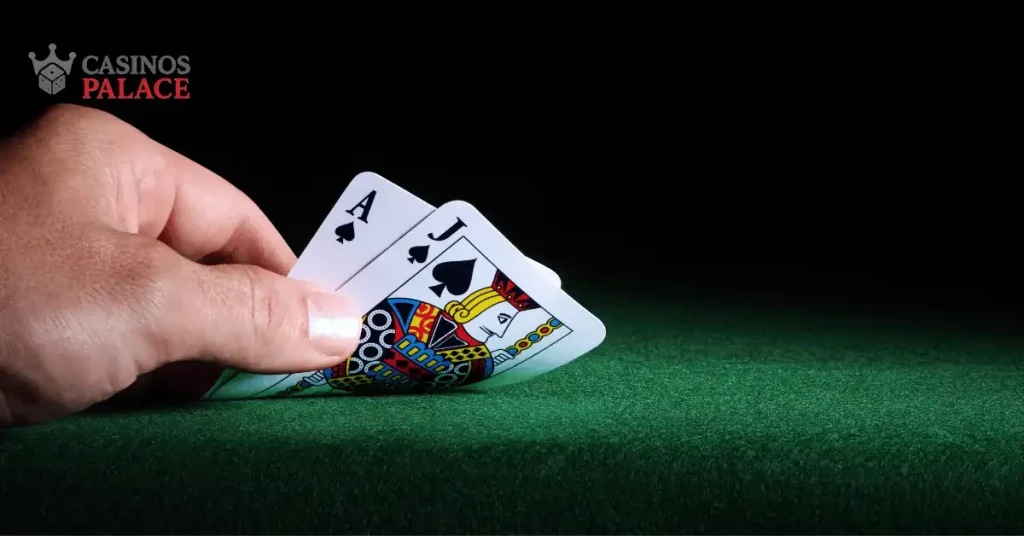
A stiff hand is generally a hard total between 12 and 16. The word “hard” means that there is no Ace being counted as 11. If an Ace has to count as 1 to prevent the hand from exceeding 21, the hand is also considered hard.
These totals are particularly awkward because you are caught between two risks:
- Standing may leave you with a total that the dealer can easily beat.
- Hitting can cause an immediate bust.
- The correct decision changes according to the dealer’s visible card.
- The safest-looking decision is not always the mathematically strongest one.
For example, a hard 16 can be made with 10 + 6, 9 + 7, or 8 + 8. Although all of these combinations total 16, the pair of 8s is normally treated differently because splitting may be the correct basic-strategy decision.
The important lesson is that stiff does not mean “always stand.” It describes the hand, not the action you should take.
Which Blackjack Hands Are Considered Stiff?
The main stiff totals are hard 12, hard 13, hard 14, hard 15 and hard 16.
| Stiff total | Example | Main problem |
|---|---|---|
| Hard 12 | 10 + 2 | A 10-value card busts |
| Hard 13 | 10 + 3 | 9 or higher can bust |
| Hard 14 | 10 + 4 | Several common cards cause a bust |
| Hard 15 | 10 + 5 | Limited room for improvement |
| Hard 16 | 10 + 6 | Very vulnerable against strong dealer cards |
A stiff hand becomes particularly important when playing online blackjack, because digital tables can move quickly and make it tempting to make decisions based on instinct rather than strategy.
Instead, treat the dealer’s upcard as the most important piece of information after your own total.
Why Are Stiff Hands So Difficult to Play?
The difficulty comes from the fact that neither hitting nor standing is particularly attractive.
Suppose you have 16. You know that drawing a 10, Jack, Queen or King will bust you. That creates a natural tendency to stand because you want to avoid losing immediately.
However, if the dealer is showing a 10, standing on 16 is usually a poor long-term decision. The dealer has a strong starting card, and your 16 needs improvement if you want to compete.
This is one of the fundamental ideas behind blackjack strategy: You are not trying to avoid every possible bust. You are trying to make the decision with the best long-term mathematical expectation.
When the dealer shows a weak card, allowing the dealer to take the risk of drawing can be better. When the dealer shows a strong card, you generally need to take the risk yourself.
This principle is just as relevant whether you are playing for real money or using a blackjack demo mode at an online casino South Africa players can access.
Hard 12: The Stiff-Hand Exception
Hard 12 is the first important exception to remember.
The general basic-strategy rule is:
| Your hand | Dealer 2–3 | Dealer 4–6 | Dealer 7–Ace |
|---|---|---|---|
| Hard 12 | Hit | Stand | Hit |
So, if you have 12 against a dealer 4, 5 or 6, you normally stand.
Against a dealer 2 or 3, however, you generally hit. This often feels wrong to new players because a 12 can easily bust with a 10-value card.
The reason is that the dealer’s 2 or 3 is not weak enough for standing on such a low total to be the better option. Against 4, 5 and 6, the dealer is more vulnerable, so you can benefit by letting the dealer draw first.
Examples of Hard 12
Common combinations include:
- 10 + 2
- 9 + 3
- 8 + 4
- 7 + 5
- 6 + 6
Remember that a pair can introduce another strategic decision. For example, pair splitting rules should be checked separately rather than automatically treating every 12 as a standard hard hand.
Hard 13–16: The Basic Strategy Rule
Hard 13, 14, 15 and 16 are easier to remember than hard 12.
The general rule is:
Stand against dealer 2 through 6. Hit against dealer 7 through Ace.
| Your hand | Dealer 2–6 | Dealer 7–Ace |
|---|---|---|
| Hard 13 | Stand | Hit |
| Hard 14 | Stand | Hit |
| Hard 15 | Stand | Hit |
| Hard 16 | Stand | Hit |
The reason is the dealer’s bust potential. A dealer showing 2 through 6 has a relatively weak starting position. Because the dealer must continue drawing according to the table rules, there are situations where allowing the dealer to take additional cards is preferable to risking your own bust.
Against 7 through Ace, the situation changes. The dealer has a stronger starting position, so simply standing on 13–16 will frequently leave you behind.
Hard 16 Against a Dealer 10
Hard 16 versus a dealer 10 is one of the classic blackjack decisions.
If surrender is available and the table rules make surrender the correct basic-strategy choice, it can be preferable. If surrender is not available, hitting is generally the standard play.
It can feel strange to hit a hand that is already so close to 21. However, basic strategy is designed around long-term results rather than avoiding the occasional immediate bust.
A Simple Stiff-Hand Strategy Chart
If you want a quick reference while learning blackjack, the following table covers the central decisions:
| Hard hand | Dealer 2 | 3 | 4 | 5 | 6 | 7–Ace |
|---|---|---|---|---|---|---|
| 12 | Hit | Hit | Stand | Stand | Stand | Hit |
| 13 | Stand | Stand | Stand | Stand | Stand | Hit |
| 14 | Stand | Stand | Stand | Stand | Stand | Hit |
| 15 | Stand | Stand | Stand | Stand | Stand | Hit |
| 16 | Stand | Stand | Stand | Stand | Stand | Hit |
This is a useful general guide for standard multi-deck blackjack, but the exact strategy can change according to rules such as deck count, dealer behaviour on soft 17 and surrender availability.
Stiff Hands vs Soft Hands
One common beginner mistake is confusing a stiff hard hand with a soft hand.
A soft hand contains an Ace being counted as 11. For example, A + 6 is soft 17. If you draw a card that would otherwise take you over 21, the Ace can potentially change from 11 to 1.
A hard 16 does not have that same flexibility.
| Hand type | Example | Can the Ace protect you? |
|---|---|---|
| Hard 16 | 10 + 6 | No Ace |
| Hard 16 | 9 + 7 | No Ace |
| Soft 17 | A + 6 | Yes |
| Soft 18 | A + 7 | Yes |
This distinction matters because soft hands are not considered stiff hands. Their strategy is different because taking another card does not carry the same immediate bust risk.
How to Avoid Common Stiff-Hand Mistakes
Even experienced recreational players can make errors with 12–16 because these totals create strong emotional reactions.
Avoid these common mistakes:
- Always standing on 16: The dealer’s upcard matters.
- Always hitting 12: Stand against 4, 5 and 6 under the general strategy.
- Playing according to previous cards: The last hand does not determine what you should do next.
- Trying to avoid every bust: Busting is sometimes the mathematically correct risk.
- Ignoring table rules: Dealer soft-17 and surrender rules can affect decisions.
- Confusing hard and soft totals: A soft 17 is not played like a hard 17.
The same discipline is useful when switching between blackjack and other casino games online. Avoid assuming that a strategy from one game automatically works for another.
Choosing an Online Blackjack Table
If you are planning to play blackjack online, the quality of the table rules matters more than simply choosing a site because it has a large game library.
Before depositing, consider:
- Blackjack payout — Check whether blackjack pays 3:2 or a less favourable rate.
- Number of decks — Rules can vary between single-, double- and multi-deck games.
- Dealer soft-17 rule — Whether the dealer hits or stands on soft 17 affects strategy.
- Surrender — Some tables offer late surrender, which can be valuable in specific stiff-hand situations.
- Betting limits — Choose stakes appropriate for your budget.
- Payment methods — Check which banking options are supported.
- Responsible gambling tools — Deposit and session controls can help manage play.
Players researching online casino South Africa options may also encounter terms such as casino bonuses, live casino, instant games, crypto casino, Bitcoin casino, and online casino payments. These are useful search terms, but always check the actual rules and availability of each service rather than relying solely on promotional descriptions.
Blackjack, Crypto Casinos and Slot Games
Blackjack is only one part of the broader online casino market. Players may also encounter crypto casino platforms offering Bitcoin or other cryptocurrency payment options, alongside roulette, baccarat and online slots.
Crypto gambling can involve additional considerations because cryptocurrency prices can fluctuate and transactions may not work in the same way as traditional card or banking payments.
Similarly, slot games are fundamentally different from blackjack. Blackjack decisions can be influenced by basic strategy, while slot outcomes are generated independently and players cannot use blackjack-style decision-making to predict the next spin.
If you are comparing the best online casinos, therefore, consider the games and payment options separately. A site with a strong blackjack selection may not necessarily have the slot titles or crypto payment methods you want.
Final Thoughts on Blackjack Stiff Hands
Stiff hands are uncomfortable, but they become much easier once you understand the basic pattern. Hard 12 is the unusual case: generally stand against dealer 4–6 and hit against other upcards. For hard 13 through 16, the general rule is to stand against dealer 2–6 and hit against 7 through Ace.
The biggest takeaway is simple: do not make stiff-hand decisions based on fear of busting. Look at the dealer’s upcard, apply the appropriate basic-strategy decision, and accept that some correct decisions will still lose.
Whether you are learning blackjack at a land-based table or an online casino, understanding stiff hands gives you a much stronger foundation for making consistent decisions.